Saturday, December 20, 2025
Home Blog Page 58

Keeping Christ in Christmas

0
Brook Jones a columnist and also the editor of The Selkirk Settler Times.

I was quite taken aback by a recent Letter to the Editor by Ian Thomson in the Winnipeg Free Press on Dec. 16. The letter stated the Free Press should not be used as an organ for a specific evangelical message regarding the front-page photo and coverage of the Knights of Columbus thanking frontline workers.

I have spent many years working as a journalist and editor in the media industry. I have a strong understanding of how newspapers and media outlets go about selecting their news coverage and how various newspapers select what they choose to cover. I would like to defend the decision by the editorial team at the Free Press to run this front-page photo of a local Winnipeg organization thanking frontline workers.

In today’s society it is important to respect freedom of speech and to also have healthy debates on current topics. Mr. Thomson expressed his views when he stated how we live in a multicultural society, which is absolutely true. However, his argument about not wanting Manitoba’s independent newspaper to run any news coverage of an evangelical organization misses the mark and does not contribute to a greater multicultural society. If fact, his argument does the opposite.

The news aspect of this particular standalone photo taken by talented photographer John Woods was of the Knights of Columbus, who happen to be a Christian based organization. Yes, their Festively decorated Christmas theme float featured a Nativity scene along with the message of “Keep Christ in Christmas”. This is an important message for this particular group in our multicultural society. But the newsworthiness of the photo was the thank you message to front line workers. I don’t think the Free Press had a hidden agenda to promote one’s religious views or particular message over another’s. There have been many movements in society during the past century that have garnered media attention and will continue to do so.

I was happy to see the Knights of Columbus Christmas theme float continuing to thank frontline workers as it was being driven down Pembina Highway on the evening of Dec. 22. It was a nice to see and I gave a wave as the float went by.

I believe the Free Press does a remarkable job of providing diverse media coverage of people and organizations from all walks of life, various religious beliefs, faiths and views. Is Mr. Thomson suggesting the Free Press no longer cover anything related to evangelical messages as well as Christmas in the future, such as the Santa Claus Parade and many other Christian based events, such as Halloween and St. Patrick’s Day? If you stop and think about it for a moment, Christ is at the root of many celebrations, which are open for people to celebrate whether you are Christian or not. I am sure the Free Press has covered Hanukkah, Ukrainian Christmas, Chinese New Year and many others. The Free Press continues to provide annual coverage of the Aboriginal Day celebrations at The Forks and celebrations related to the Metis nation. The Free Press also covers Festival du Voyageur, Folklorama each year as well as many other multicultural celebrations and diverse cultures.

In fact, when Mr. Thomson noted the Free Press should not have published such a photo, this could be viewed as a discriminatory view towards a particular group and their religious beliefs, which in this case, is the Knights of Columbus. He stated the Free Press should not provide media coverage because of their evangelical / religious view. It sounds like Mr. Thomson is in fact wanting the Free Press to promote our multicultural society, but is going about it in the wrong way. If his multicultural view is true, then he would actually want the Free Press to cover news related to Christians as well as many other religious and cultures groups throughout the year.

All cultural groups and various religions organizations in today’s modern society are worthy of media coverage, including those of Christian beliefs. The answer to promote multicultural is not to take away media coverage from one particular’s culture and silence their messages.

I have been reading the Free Press since I was in Grade 5. Fast forward 32 years and I have truly enjoyed seeing the Free Press evolve as a newspaper since then. I feel that under the leadership of Paul Samyn and Bob Cox, they have put together a staff which provides diverse coverage each and every day.

Brook Jones is the editor of The Selkirk Settler Times

Selkirk mayor reflects on 2020, looks ahead to 2021

0

The Selkirk Settler Times caught up with Selkirk Mayor Larry Johannson on the first day of 2021 for a look back on 2020 and a look ahead for 2021.

Happy New Year from Selkirk Mayor Larry Johannson

Selkirk Mayor Larry Johannson celebrating New Year's as he reflects on the year that was in 2020 and looks ahead to the year that will be in 2021. (Brook Jones/Selkirk Settler Times)

Posted by The Selkirk Settler Times on Friday, January 8, 2021

Full feature coming soon or visit us on Facebook to see the full video feature.

Most fascinating people of 2020

0

The Selkirk Settler Times presents the most fascinating people of 2020.

Full feature coming soon.

Top news makers of 2020

0

The Selkirk Settler Times presents the top news makers of 2020.

Full feature coming soon.

Community shows their love, support for local grocer

0

Dozens and dozens of local residents thanked Stan Halbesma on New Year’s Eve and he in-turn he thanked the community for supporting his local business.

Located in the RM of St. Andrews, Halbesma has been very much a staple of Harry’s Foods for many years, but the time has come for him to move on to other ventures in his life.

It was fitting that the final day of 2020 was Halbesma’s final day as owner of the Harry’s Foods location in St. Andrews.

Wishing you a happy COVID-free New Year

0
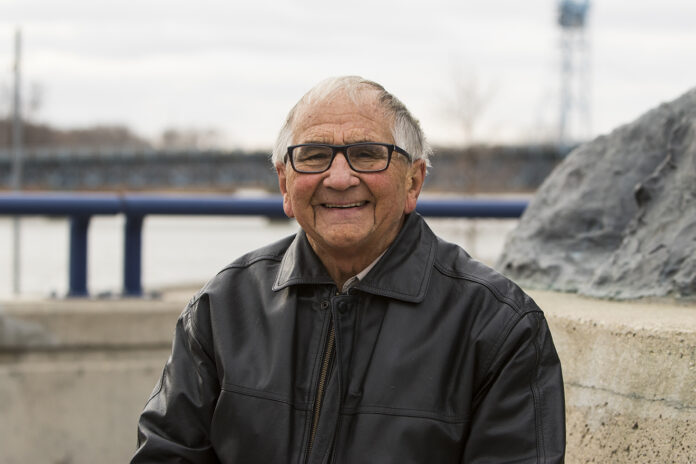
Henry Ozirney was the founding pastor of New Life Church in Stonewall Man.,, where he served from 1970 until he retired in 2014. Ozirney is currently the Interim Pastor at New Life Church in Teulon, Man. He writes a weekly column for the Selkirk Settler Times. (Brook Jones/Selkirk Settler Times)

Recently, I came across “The New Year’s Prayer”: “Dear Lord,  So far this year I’ve done well. I haven’t gossiped, I haven’t lost my temper, I haven’t been greedy, grumpy, nasty, selfish, or overindulgent. I’m very thankful for that. But in a few minutes, Lord, I’m going to get out of bed and from then on, I’m probably going to need a lot more help. Amen.”

As we look forward to 2021, I think all of us are going to need a lot more help. When I think back to January 1, 2020, who would have ever thought at that time we would have the year we did? So, that begs the question: what will 2021 look like?

As we anticipate 2021, there are lots of questions: how long will COVID hang around? What will a “Post-COVID” world look like? What about that new strain that was discovered in England and is now in Canada? What about the vaccines they are talking about? What does the future hold?

Because of all of this uncertainty, there are many people who are looking forward to the New Year with fear, and especially because of all those COVID-related challenges. One example of this came up in a video I recently watched, entitled, “Covid long-haulers fear for their future”. It stated that months after the initial infection, significant numbers of COVID patients are finding themselves dealing with ongoing symptoms such as brain fog, shortness of breath, heart arrhyrthmia, hypertension, persistent fever and even complications such as organ damage.

I’ve seen this with our friends, Randy and Margo Hoffman who last April  both contracted COVID. They recovered but just last week, Randy sent an email asking for prayer “for Margo and I to continue to recover. She still feels extra tiredness at times, and I am still experiencing a lack of stamina and endurance. I also have extra aches and pains – arthritis that has been exacerbated by COVID.”

Now some folks are looking forward to 2021 with hope because of the new vaccines that are coming out, which they see as the light at the end of a very dark tunnel. A friend sent me an excited email about this: “It seems like an answer to prayers, that maybe the world, church services and so much more might come back to normal soon!”

At the same time, we recognize there are those who vigorously oppose the proposed immunizations and who see these vaccines as being the worst possible thing.

Actually many people, good people, stand on opposite sides of that debate. When someone recently asked me my opinion on whether or not to take the new vaccine, I said the way I am going to decide is by going to God in prayer and asking what He wants me to do. I believe this is a decision every believer should make between themselves and God. We are under His authority and His alone. What others do or don’t do should not enter into our final decision.

Finally, I myself am looking to the future with hope. I do so because of two things. One is because I am assured that as I go into the future, God will go with me.  He has promised, “Never will I leave you, never will I forsake you.” And secondly, it’s because I know how it will all turn out in the end.

When asked, “Aren’t you afraid of the future?” one Christian man replied, “No I’m not. That’s because I’ve read the last Book of the Bible, Revelation and I found out: we win.”

Happy New Year

0

The Selkirk Settler Times extends warm wishes for a happy and healthy New Year.

2020 in review – COVID impacts city, but Selkirk kept moving forward

0
Asset Management/GIS Technician Megan Jakilazek at the Leading Change’s conference for globally conscious citizens under the age of 35. (Photo Submitted By The City of Selkirk)

Submitted by City of Selkirk

There’s no other way to paint 2020, it was a year that was coloured by COVID-19 at every turn since we first heard whispers of the virus in February – a month later the NHL season was cancelled and suddenly a far away concern was on our doorsteps.

We spent the spring under strict measures to stay home, emerged for the summer months when there were multi-day streaks with no new infections in the province, and now, as 2020 is about to wrap, the world hopes a vaccine will start the path back to normalcy.

In Selkirk, the city responded to COVID-19 with its Business Continuity Plan and Response Strategy. It’s a document that has evolved with the pandemic and safely charted the city’s course to continue providing critical municipal services to citizens.

Mayor Larry Johannson said COVID-19 has been a challenge for everyone, and he’s proud of the way the city met the challenge.

“It’s been an unprecedented year for all of us and there have been day to day struggles that the entire world has had to go through. We’re not getting together with family, we had the holiday season and itwas not  like any other in memory and that’s very difficult for people,” Johannson said.

“There’s been an economic impact felt by many as well and for the city I’m pleased to say that our administration worked hard to ensure citizens had access to services they needed, we moved online where we could and we did our best to keep staff and citizens safe. We’re at a point where we’re so close to being through this with a vaccine here now, so I encourage everyone to hang on a bit longer and let’s look forward to 2021.”

CAO Duane Nicol said the city made sure it didn’t have a knee-jerk reaction to COVID-19 but instead created a plan that would keep the city operational.

“Our No. 1 goal was to keep services up and running in a way that was accessible to our citizens and kept them, and our staff, safe. We wanted to make sure that people stayed employed, and that we weren’t transferring the economic impact to our staff,” Nicol said.

“We didn’t react immediately to COVID and start shutting down parks and other amenities, we took a beat and developed a comprehensive plan that contemplated an escalation of cases. It is rooted in science, good public policy and focused on citizen needs,  We’ve been guided by this plan, and we’ve amended it as new things happened or as the province changed regulations or legislation with the health orders. The plan has allowed us to manage the impacts and minimize the impacts to citizens on service delivery.”

Kyla Ray, Manager of Cultural and Recreational programs, said staff pivoted in the face of COVID-19 and found new ways to keep Selkirk engaged.

“Despite COVID-19 restrictions and having to cancel fall in-person programming, we were still able to offer a successful pool, day camp and playzone season in the summer months and did so safely,” Ray said.

While the highly anticipated waterfront concert series and Canada Day events were cancelled, staff succeeded in planning virtual and outdoor engagement activities such as quiz nights, bedtime stories live and several outdoors displays.

“The Halloween I-spy and outdoor holiday selfie station gave families and individuals a reason to get outside to enjoy the rather warm fall and winter weather; at least weather was on our side,” Ray said.

The city’s asset management program saw important infrastructure work continue despite COVID-19 including the completion of Manitoba Avenue East. The redesign of the iconic avenue included a switch to two-way traffic and parallel parking, new trees, sidewalk and curb upgrades and the inclusion of two pocket parks.

“Two-way traffic naturally reduces the speed of motorists, it’s a traffic calming measure through environmental design,” Nicol said.

“This makes the area more pedestrian-friendly and provides more visibility for the retail businesses on that street.”

One of the pocket parks is home to Anishnaabe Mashkiki Gitigaan – The People’s Medicine Garden, a suggestion that came out of an April 2019 open house on Manitoba Avenue East revitalization.

Jeannie Red Eagle had the idea, and collaborated with students in Comp teacher Mark Walterson’s First Nations, Metis and Inuit Studies class to make it a reality.

Folks living on the 400, 500 and 600 blocks of Manchester Avenue are now residing on the newest street in the City of Selkirk and for the next 30 years or so, shouldn’t see construction activity as the view from their front windows.

Construction began on Manchester in the summer of 2018 and wrapped up this summer on what is a total replacement of the street itself and everything underneath it, including separating combined sewers.

Johannson said work on the three blocks on Manchester Avenue is a perfect example of the city’s Capital Asset Management Program in action.

“Our CAMP team identified Manchester as a priority because of the condition the sewer was in and now it’s been completely rebuilt. We’ve been there for three summers in a row but now the job is done and we won’t be back anytime soon,” Johannson said.

In 2020 the city invested in infrastructure to move wastewater to its new plant, set to open summer of 2021.

A $2.4 million west end lift station was completed and construction continues on a $735,000 Selkirk Park lift station.

North Main Street also saw improvements with cleaning and relining of watermains – a move that will strengthen the pipe’s integrity and extend their life by more than 50 years.

Sidewalks were made safer in 2020 with an affordable repair that rid 138 locations of trip hazards. A cement grinder levelled rough and blunt areas and made them flush with the rest of the surface, which meant they didn’t have to be fully replaced; a costly move.

“It’s an extremely cost effective way of prolonging the life of the sidewalk and making our active transportation network safer for people,” said Ryan Sicinski, Manager of Public Works. It was a $17,000 fix, as opposed to about $55,000 to re-pour and replace concrete in the locations that were repaired.

More than 7,000 metres of Selkirk streets received a crack sealing treatment last summer that will protect the road’s base and extend its lifecycle by preserving its integrity and delaying the occurrence of potholes and further cracking.

To make sure it targets the right streets for repair, the city rates its streets according to the Pavement Condition Index and then uses its Capital Asset Management Program to identify which roads are ideal candidates for things like crack sealing, targets them and by doing so extends their life.

Comp graduate Robyn Kacperski’s design will be featured high above the city skyline on the water tower after her artwork was selected from more than 30 submissions.

The city put out the call for designs to rejuvenate the tower, and council, with input from community leaders in arts, culture and heritage, made a decision without knowing the artists’ identities.

“There were so many amazing designs to choose from, we wish we had 2 or 3 water towers to show off the amazing work that was given to us,” Johannson said.

“In the end, we had to make a decision based on how it reflected our community, the feasibility of painters to paint the design, and how well it could be viewed from afar. Robyn’s design ticked all those boxes.”

The revitalization and painting will take place in 2021.

Selkirk was recognized numerous times in 2020 for its ability to lead, beginning with Asset Management/GIS Technician Megan Jakilazek being accepted into Leading Change’s conference for globally conscious citizens under the age of 35. Only 150 young guns from around the world are accepted, so it’s no small feat.

Later that month, Nicol was off to the west coast to present, alongside the Prairie Climate Centre, on the city’s Climate Change Adaptation Strategy at Adaptation Canada 2020, the country’s national conference on climate change adaptation.

Both were able to attend before the reality, and travel restrictions, of COVID-19 kicked in, and both had tremendous takeaways from their experiences.

For Jakilazek, the connections she made were invaluable.

“Having a peer group of experts like I met at Leading Change will allow me to reach out to specific individuals and ensure best and leading practices are getting incorporated into future programs, projects and policies within the City of Selkirk,” Jakilazek said.

Nicol said great feedback and learning from the best in the world can’t be beat, and he credits his seat at the table to Selkirk’s unique Climate Change Adaptation Strategy.

“By making our strategy practical and integrating the proposed activities into the business of the municipality we took adaptation from a side project, sitting on someone’s desk, and made it part of our core government activities like asset management and budgeting. As we’re making regular business decisions about our infrastructure, we’re considering climate change impacts and by doing that we’ll be more adapted in the future,” he said.

There were no more in person appearances after that, but Nicol became a web slinger in his own right, with invites to another eight webinars on asset management of climate change throughout the remainder of the year. And, Selkirk’s Climate Change Adaptation Strategy was a case study for the Municipal Climate Services Collaborative, a Federation of Canadian Municipalities and Canadian Centre for Climate Services joint initiative. The Collaborative released a series of online tools to help other municipalities get the climate change conversation started.

The city’s reputation as an asset management leader played a role in developing a relationship with the University of Manitoba’s Dr. Ahmed Shalaby, Municipal Infrastructure Chair and Chairholder.

Selkirk adopted the same road construction standards at the City of Winnipeg in 2020, standards that are based on Shalaby’s expertise in pavement and infrastructure engineering and management.

“What we’re doing with our roads construction standards is really kicking asset management into high gear. We are actually using it to make better decisions. Our investments into data collection, life-cycle analysis, policy and procedure development are returning value.”

Shalaby and his students were in Selkirk in summer 2020 dropping heavy stuff on streets in a pilot project that will help the city bridge its infrastructure deficit by learning lessons provided by a tool called a falling weight deflectometer.

Selkirk was the first city in the province to have access to the technology that ultimately will lead to better designed roads here and across the country.

“You can’t solve a problem with the same thinking that created it. Asset management is a core part of our efforts to modernize city government. We’re creating Selkirk 2.0 with strategic investments into our people, our processes and our technology. This pilot is a fantastic example of how we’re making that vision a reality,” Nicol said.

Selkirk obtained its ISO standard for municipal data in 2020 and with it joins the ranks of status cities like London, Boston, Amsterdam, Dubai and Toronto. Selkirk is the first and currently only community in Manitoba to have embraced and adopted this transformative and innovative process.

“Adopting the ISO standard ensures the information Selkirk provides to prospective investors, government agencies and other parties will contribute to better informed decision making,” said the city’s Director of Sustainable Economic Development, Tim Feduniw.

“Accurate, credible and consistent information is critical to attracting and shaping positive community economic growth.”

The city continued its innovative ways with a pilot project to test the success of native plants along the city’s boulevards. It’s an environmentally friendly idea that had the city joining forces with local business owner Kelly Leask and her company Prairie Originals.

Leask planted about 350 plugs on a portion of the Main Street north boulevard and also seeded another section so they could compare which method thrives.

Leask called the plantings “a sensible way to do things differently to improve the environment for everybody, and not just people, for other wildlife too.”

The city also created two new endowment funds, one for recreation and one for accessible transit. These funds will allow the public to keep their charitable donations local while supporting upgrades to facilities and programs and making transit more accessible and available to all residents.


Caregiver support program continuing to recognize importance of front-line caregivers, protects Manitobans

0

Submitted by the Province of Manitoba

Manitoba government has processed more than 19,400 applications for the first round of the $35-million Caregiver Wage Support Program that recognizes front-line workers who provide direct care and help protect vulnerable Manitobans at personal care homes and other critical settings during the COVID-19 pandemic, Families Minister Heather Stefanson announced Dec. 23.

“This important front-line work may sometimes go unseen, but that does not mean it goes unappreciated,” said Stefanson. “The dedication and compassion staff show every day is a tribute to how much they care about the people they serve. On behalf of seniors, children in care and people with disabilities or in homeless shelters, we want them to know we value their work.”

The Caregiver Wage Support Program completed its first intake last week. More than $16.3 million, with an average of just over $850 per applicant, has since been distributed. This wage top-up is targeted at Manitobans currently working on the front lines of the pandemic response and providing support for Manitobans in 24-7 group care settings. These include health-care aides, direct service workers, recreation workers, housekeeping staff and others who provide direct care to vulnerable Manitobans at personal care homes or in disability services, child welfare services, homeless and family violence prevention shelters, and long-term care facilities.

Eligible employees receive an hourly $5 top-up to their wages, based on the number of hours worked between Nov. 1, 2020, and Jan. 10, 2021. The second program intake will open Jan. 11, 2021, and remain open until Jan. 18, 2021. The benefit is paid directly to workers by the province in the week after each intake period closes. To qualify, workers must earn a regular wage of $25 per hour or less.

“We are all in this together, and it’s important that we continue to support the people on the front lines of our battle with COVID-19,” said Health, Seniors and Active Living Minister Cameron Friesen. “Their dedication and compassion help many of our most vulnerable citizens get through each day, and their professionalism is helping keep Manitobans safe.”

The Manitoba government has partnered with the federal government in cost-sharing the program, which recognizes low-income and middle-income workers who have been integral in supporting the province’s pandemic response. The Manitoba government is providing $18 million, with the federal government contributing the remaining $17 million. 

Additional information on the Caregiver Wage Support Program, including information on how workers can register, is online at https://manitoba.ca/covid19/programs/caregiver-wage-support.html.

The Manitoba government is taking strong action to protect Manitobans and to ensure timely access to care. For more information on COVID-19 in Manitoba, visit www.manitoba.ca/COVID19.

Rink of dreams

0

Gary Dear has been working his magic as he had created a backyard hockey rink for his family.

After a hiatus for a few years, the St. Andrews resident decided to once again create a back yard rink.

Verified by MonsterInsights